Anxiety in autism – Part 1
Anxiety is such a huge issue for kids on the autism spectrum, with Asperger’s, sensory processing disorders, and other neurodevelopmental issues.
A lot of adults (especially parents of those on the spectrum!) experience anxiety as well. Anxiety issues happen for all age ranges and neurological profiles, but in this blog, I'm going to talk specifically about kids on the autism spectrum.
Anxiety for children can look like the following
- Rigidity in behavior
- Rigidity in the body
- Holding on to objects
- Fear of things that don’t make sense to be afraid of (for us)
- Obsessive Compulsive Behaviors
- Bathroom issues – holding it in
- Trouble sleeping
- Night terrors
- Fear of people
Rigidity
 Rigidity can manifest through timing, schedule, food, wanting sameness or an exact routine, or being upset if something is out of order. For example, their shoes have to be put on before their coat, then the hat next, or something like that. Rigidity means that things have to happen in a very exact specific way.
If done out of order, there could be screaming, crying, or chaos. In this case, parents tend to walk on eggshells. Parents are very stressed themselves, trying to do the right thing so there is calm. For children, this is their way of controlling something in their world; the sameness helps them to feel safe.
Holding onto objects
 Having an item in their hand makes them feel safe. My son used to clutch a Thomas train in his hand. I just got used to him having that everywhere we went. He always had it in his hand. Some kids might have blankets or toys or stuffed animals.
OCD Behaviors
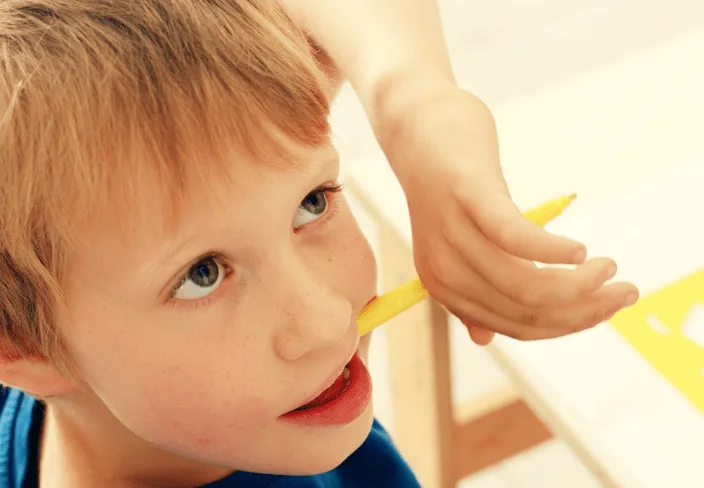 Needing to have objects arranged in a certain way can be a sign of anxiety. Some children I know have to arrange all the living room furniture exactly the right way or have a space completely cleared. The dining room chair has to be just so and tucked in all of the time.
Some kids need to do their bedtime routine exactly the same way each night, including turning on and off the light switch. The shoes at the door have to be lined up just so. Other similar behaviors are signs anxiety is at play.
Holding in waste
 Holding in waste when needing to eliminate is another example of anxiety behavior. I've talked to a lot of parents whose child is still in diapers. Their child will go hide behind a chair to poop in their diaper, or is really afraid to use the toilet. Sometimes they are just afraid to let go of their waste.
I suspected my son was afraid to go to the bathroom, at school specifically. He would urinate, but I don't think he ever pooped at school. Maybe he did and I didn't know it. But when he came home, he would throw down his backpack at the door and rush to the bathroom. So I figured he'd been holding it in most of the day. I think a lot of people, not just anxious kids, are reluctant to poop in public places.
Sleep and night terrors
 Some kids have night terrors or bad dreams. You might be afraid to go to sleep if you're going to be terrorized at night. Right? Even just the fear that they’re going to be away from their parents can cause anxiety. I know a lot of kids who want to sleep with their parents even as they're older.
Actually, my son was like that. I purposely allowed co-sleeping because it didn't bother me at all. I felt as if I'd rather have my child close by, especially when it was easier for nursing at night as a baby. As he grew older this behavior stuck, but it was so sweet and I still didn't mind – until a certain point. One day it was clearly time for him to get into his own bed. We managed by creating a comforting nighttime routine. So there are ways to help your child with that behavior.
Others have used tents over the bed, an enclosure that makes the child feel safer. Weighted blankets can be very comforting, making the child feel like they are snuggled in tight and safe. Sometimes taking disturbing things OUT of the room can help – any Bluetooth or Wi-Fi device (think baby monitor), or other things that may create noise or sensation your child isn’t happy about.
Fear of other people
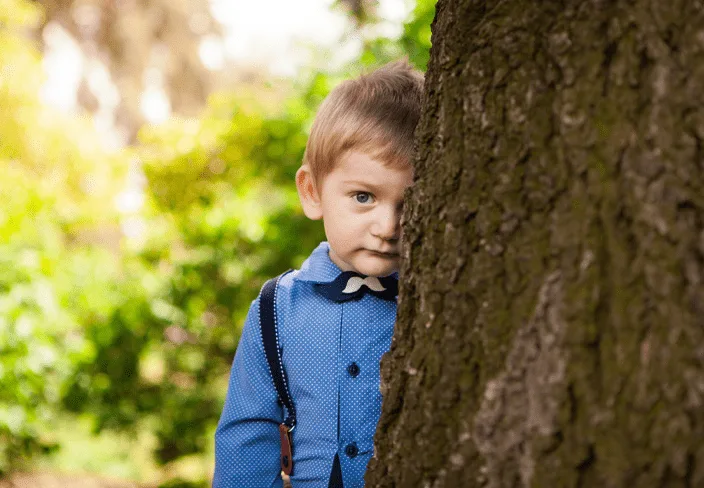 Shrinking behaviors, like moving backward from someone, can be attributed to anxiety as well. This can mean your child has a sense of not feeling safe.
There is separation anxiety, or the need to know where mom, dad, or sibling is at all times.
Needing to be near someone known in the family makes a child feel safer. At some point in development, this is supposed to disappear, as a child gets more curious about the world and less afraid.
I was really shy as a kid, so I understand this behavior a lot. I think our kids on the spectrum and many kids these days are very, very sensitive energetically and they can read people's energy coming before they even say anything. It can be overwhelming in general, but it's especially overwhelming to a system that actually isn't handling the input well.
Why are kids so anxious?
Over-sensitivity
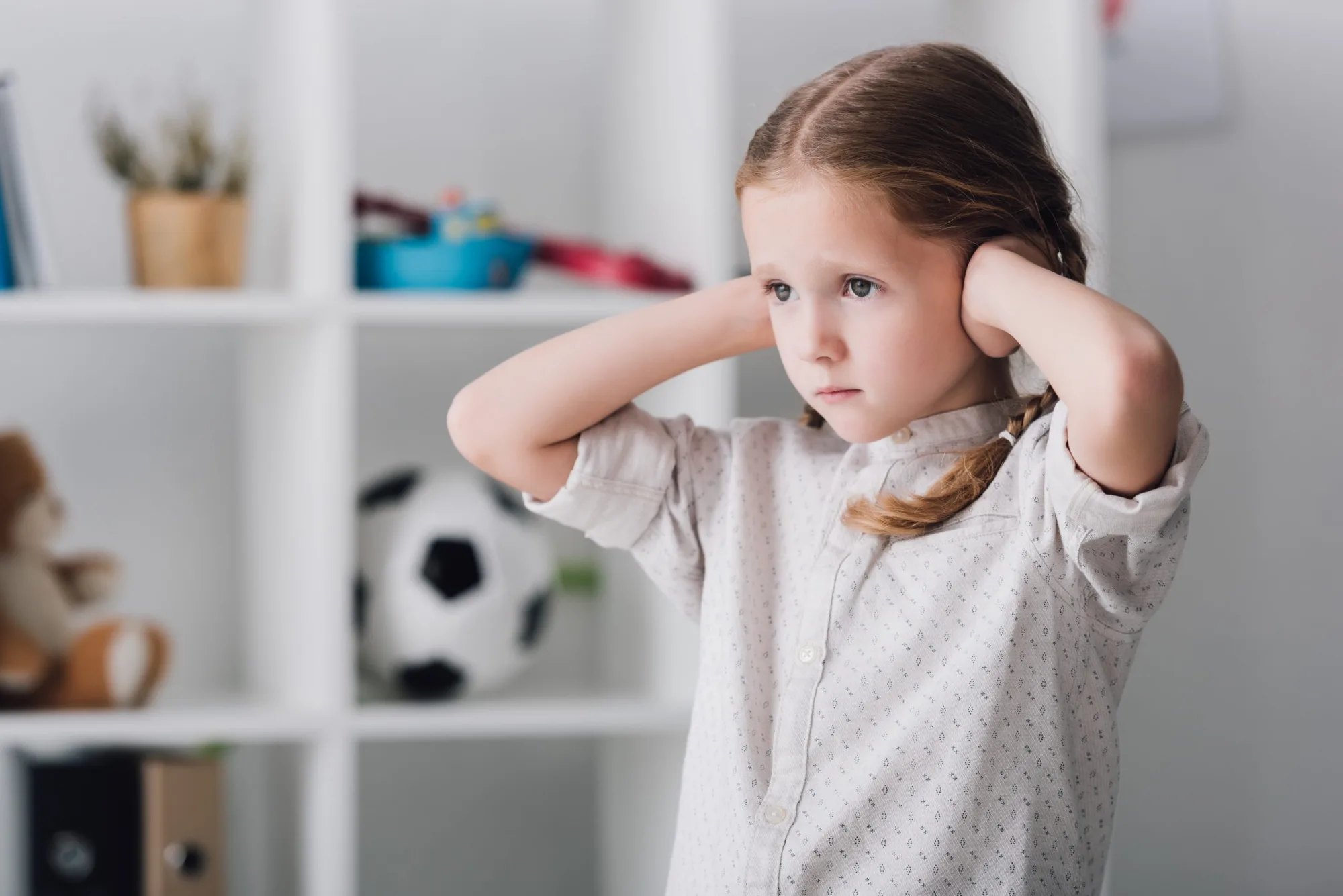 Over-sensitivity can produce anxiety. Those I work with seem to be very open and sensitive. Imagine if you're hearing 12 different noises at once. You're hearing the train outside, the birds chirping, the refrigerator humming, music, the video that is playing, and your parents speaking.
That can be overwhelming for those with sensory processing issues. Normally our brain can dampen these noises using our sensory inhibition system. In a well-functioning brain, it hears a bunch of noises and decides what's important, and filters out the rest.
The brain isn’t filtering well
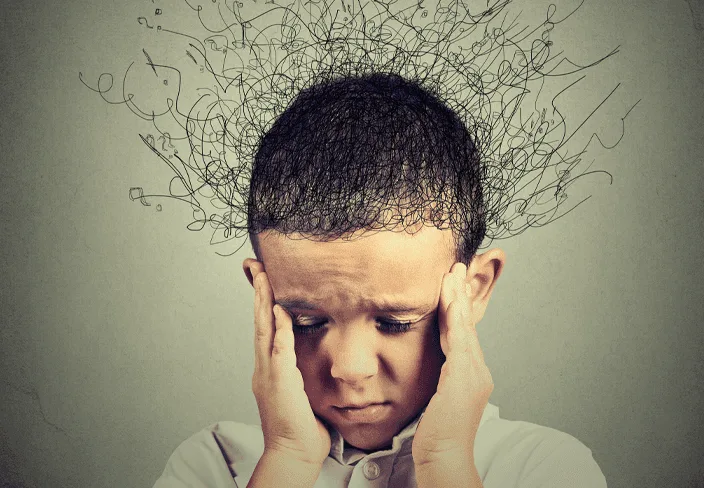 The sensory system is getting too many messages, which is overwhelming and creates anxiety. There are a lot of reasons why that sensory system isn't working well and it’s not always the same exact thing from child to child.
Think about when your child goes out to the grocery store with you or to a public place where there are a lot of people. They might move closer to you. There are energies of other people around – feelings and emotions – your child may be picking up on. Noises, chemical smells, and bright lights. All of this might just be too overpowering for a brain that scrambles those signals and doesn’t know how to block them.
Well, what is underneath that? Neurotransmitter imbalances, inflammation, toxins, infection, genetics, underdeveloped areas of the brain, and lack of neuron connectivity – basically the neurons in the brain aren’t talking well to each other – can all contribute to the sensory issues.
Neurotransmitter imbalances
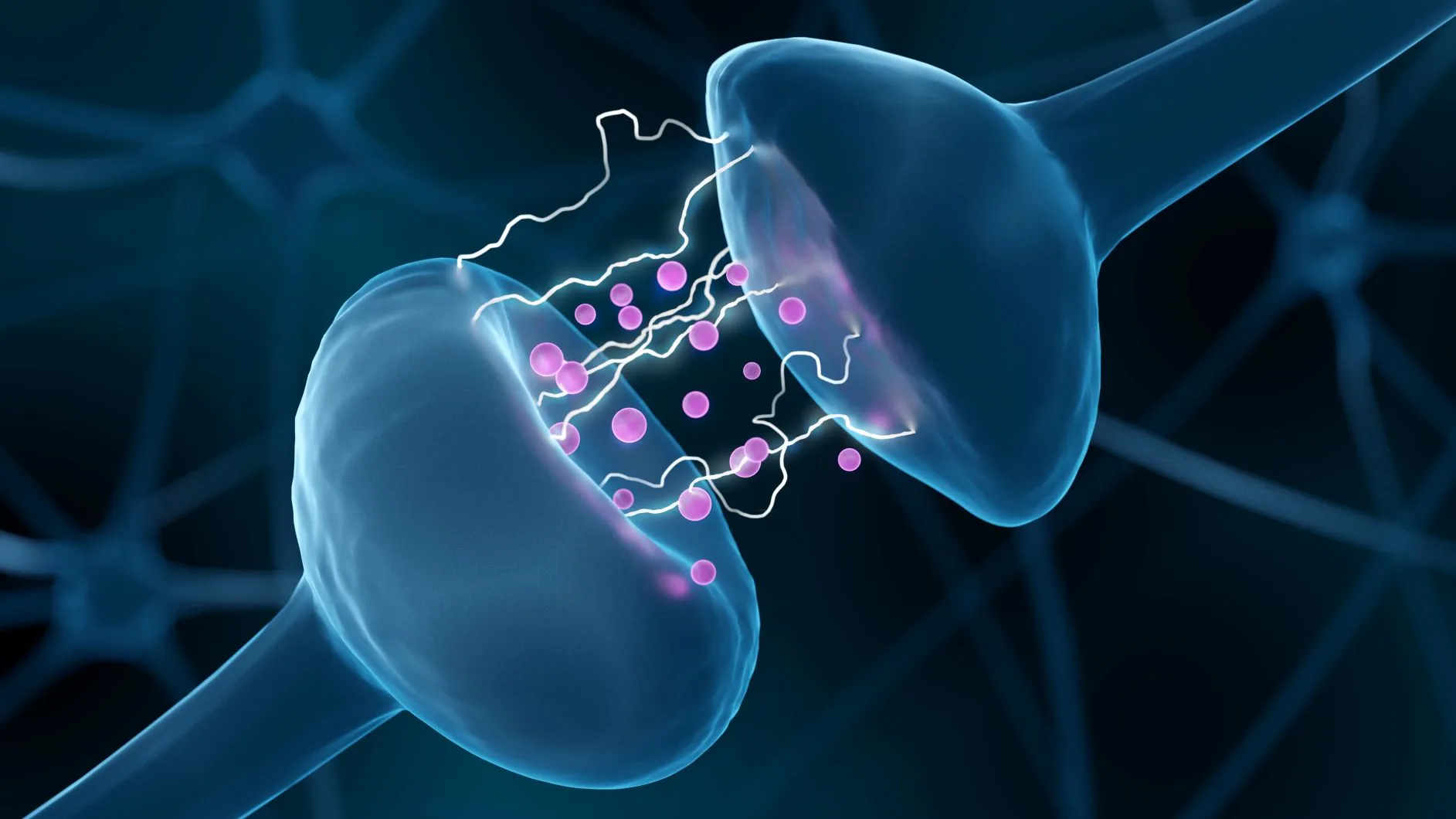 This can be associated with a lack of inhibitory neurotransmitters. The brain is exposed to an excess of chemicals that are called excitotoxins that stimulate the brain.
Without a balance of calming or inhibitory neurotransmitters like GABA, we can see anxiety, aggression, and antisocial behaviors. Excitotoxins come from food additives: MSG, artificial flavorings and colors, food preservatives, and other unnatural additives. [1]
Genetics and body biochemistry
Depending upon genetics and the biochemistry in the body, we can not have the capacity to create or break down the correct neurotransmitters or convert usually calming chemicals, like the amino acid glycine, into glutamate, a well-known excitotoxin. [2]
Serotonin
Serotonin is a neurotransmitter that makes us feel really good and happy. For instance, if we eat sugar we feel really good and satisfied because it lights up our brain in a happy way. So if we're deficient in serotonin, we're not going to be happy.
That can lead to anxiety, as well as depression. Most of our serotonin is made in our gut. It's pretty well known that kids on the spectrum have gut issues – an imbalance of gut flora and leaky gut. It's a tall order to fix the gut, but it must be done.
Inflammation
You probably already know about brain inflammation making the brain not work well and creating various neurological symptoms. If your child is holding their head, pushing their forehead, banging their head, or kind of knocking themselves around a little bit you can suspect inflammation.
If you have a headache or you're having pain it's going to set you on edge. This can manifest as anxiety (also crankiness). Using ibuprofen (not Tylenol) is one way to reduce inflammation, and may help your child feel better within half an hour. Other natural anti-inflammatory compounds, such as turmeric, could also be helpful.
Personally, I wouldn’t want to give my child medication, even ibuprofen, every day. What we really want to do is get to the root cause of that inflammation. That could be something called mast cell activation. A mast cell is an immune system cell that's involved in creating a histamine response and releasing inflammatory chemicals. It can be inappropriately out of control. Mast cell activation syndrome is when these cells release inflammatory chemistries without stopping. Dr. Theoharides, a mast cell activation researcher at Tufts University, has developed a product called Neuroprotek , which contains luteolin, quercetin, and rutin, in combination with an effective delivery system. [5]
“A variety of toxins can affect the neurological system.”
Radioactive elements
Radioactive elements like radium, uranium, radioactive cesium, and iodine are toxins that affect the neurological system. Radium breaks down into radon – the radon gas you may have heard can come up into the basement. If you breathe it and you don't have good circulation, it can kill you. Radium is what radon is before it breaks down into gas form. So if we have radium in our water, that's not good. It sits in our cells. It’s bone-seeking – it can get into our bones, as well as our mitochondria, those organelles inside the cells that produce energy for all of our activities. In a study performed by the Environmental Working Group (EWG) of American city drinking water from 2010 to 2015, radioactive elements were found in drinking water for over 170 million Americans. [3] If you're in the U.S. you can check your city water supply for radium and other toxins https://www.ewg.org/tapwater/ Type in your zip code and you’ll get information on how much over the safe level the contaminants in your city’s tap water are. Because so many things, not just radium, get into our city water supplies, I currently recommend using a countertop water distiller to take these contaminants out. Be sure to add some minerals back into the water.
Heavy water
Water consists of one oxygen molecule and two hydrogens, each of the hydrogens having one proton and one electron. Heavy water, or heavy hydrogen, has a proton, electron, and neutron per hydrogen molecule, making it weigh more or ‘heavy’. This means it doesn’t behave properly when it goes through the mitochondria to produce energy. It stalls out the energy production process. [4]
Toxins from pathogens – endotoxins or exotoxins
Toxins from pathogens, endotoxins, or exotoxins, are produced from the little microbes you have inside of you, the ‘bad guys’. They grow and grow and poop out toxins, creating more waste for the body to eliminate and messing up biological processes. Mold, yeast, parasites, and other opportunistic organisms can all produce compounds that interfere with brain function.
Autoimmunity or PANS and PANDAS
Pediatric Acute-onset Neuropsychiatric Syndrome (PANS) means a microbe particle has crossed the blood-brain barrier. Our immune cells think a protein in our neurons looks the same as the protein from the microbe and attacks the brain. This is called molecular mimicry. PANDAS means the microbe chemistry comes specifically from a strep infection (Pediatric Autoimmune Neuropsychiatric Disorders Associated with Streptococcal Infections).
Autoimmunity in the brain can also happen because a food protein, like one from milk, looks very similar to our own human brain chemistry. It’s another cause of inflammation in the brain.
Chemicals
There is a myriad of other toxins that get inside the body and thwart our biochemistry, brain signaling, the immune system, and more. Heavy metals are of particular concern: mercury, lead, cadmium, tin, and aluminum. There are chemicals we use in cleaners, shampoos and lotions, medications, pesticides, and herbicides sprayed on food, chemicals in processed foods, fire retardant chemicals sprayed on furniture, rugs, mattresses, plastic containers, and other plastics that get into food, off-gassing chemicals from new housing materials, that ‘new car’ smell (all bad chemicals for the body), and air fresheners. The list seems endless. To avoid these things, read ingredients on anything you buy – food, furniture, toys, personal care products, everything!
Uneven brain development
During the first few years of life, areas of the brain develop in a certain order at different times, for a certain length of time. If one area doesn’t develop on target, areas of the brain that build upon that cannot develop properly. This is why it’s so important to integrate primitive reflexes within the first two years of life. [6]
If your child is sick, has a head injury, or has physical or emotional trauma when a part of the brain is supposed to develop, that area of development is skipped. Then the other side, or another part of the brain, develops three months later and can get overdeveloped, leading to areas of excellence or brilliance. This brain trauma can create tangles among neurons. Tangles are when neurons grow but are not pruned in an appropriate manner. The result is neurological confusion.
Autonomic Nervous System Dysfunction
A lot of our kids are under stress, and physical and emotional pain. That contributes to anxiety. These little bodies tend to be stuck in sympathetic dominance, or fight or flight mode, stress – that most of us are stuck in. The other side of that is that the parasympathetic nervous system, the rest and digest part, can be shut down.
Oxygen – not enough
A lot of kids go into hyperbaric oxygen chambers, a system that forces oxygen into the body through pressure, to assist with oxygen getting into the brain, cellular respiration (helping the mitochondria function better), and overall bringing oxygen to the body tissues.
I don’t personally feel like we need this. We do need more oxygen in the system, but I believe there are other ways to get that. One of the best ways I’ve found is BioMolecular Oxygen from CellCore Biosciences. It’s a liquid that brings oxygen right into the body tissues.
If you decide to use this, I recommend you go low and slow. And have the guidance of a practitioner who knows what she is doing – because going too fast can cause problems. And there are other things you will want to do in conjunction with this.
Your own energy and anxiety can exacerbate anxiety for your kids on the spectrum.
Mom and dad… If you're stressed, your kids are going to be stressed. They feel you. They're going to totally pick up on all your emotions – you’ve probably already noticed this . Even if you have a really nice look on your face but inside you're totally stressed, they're going to pick up on that.
It could be a really good idea for you to do some calming activities on yourself.
Whew, this got a bit longer than I had anticipated. Anxiety in Autism – Part 2 has strategies for helping with anxiety.
If you watched the whole video above, folks asked questions, and I gave many strategies to help manage anxiety.
Do you already know you want help?

References
1. Neuroscience. 2nd edition https://www.ncbi.nlm.nih.gov/books/NBK11084/ Editors: Dale Purves, George J Augustine, David Fitzpatrick, Lawrence C Katz, Anthony-Samuel LaMantia, James O McNamara, and S Mark Williams.
2. Neuroscience. 2nd edition https://www.ncbi.nlm.nih.gov/books/NBK11084/ Editors: Dale Purves, George J Augustine, David Fitzpatrick, Lawrence C Katz, Anthony-Samuel LaMantia, James O McNamara, and S Mark Williams.
3. EWG By Bill Walker, Editor in Chief, and Wicitra Mahotama, Environmental Analyst https://www.ewg.org/research/170-million-us-drink-radioactive-tap-water-trump-nominee-faked-data-hide-cancer-risk
4.Biological effects of deuteronation: ATP synthase as an example Biochemistry Laboratory, TSK Rehabilitation Center, Gulhane School of Medicine, 06800 Bilkent Ankara, Turkey, Corresponding author. Abdullah Olgun
https://www.ncbi.nlm.nih.gov/pmc/articles/PMC1808445/
5. Theoharides, T. C., Tsilioni, I., Patel, A. B., & Doyle, R. (2016). Atopic diseases and inflammation of the brain in the pathogenesis of autism spectrum disorders. Translational Psychiatry, 6(6) – https://algonot.com/product/neuroprotek/
6.Disconnected Kids: The Groundbreaking Brain Balance Program for Children with Autism, ADHD, Dyslexia, and Other Neurological Disorders (The Disconnected Kids Series) by Dr. Robert Melillo